Estratégia de Negociação com Desvio de Volatilidade SMA

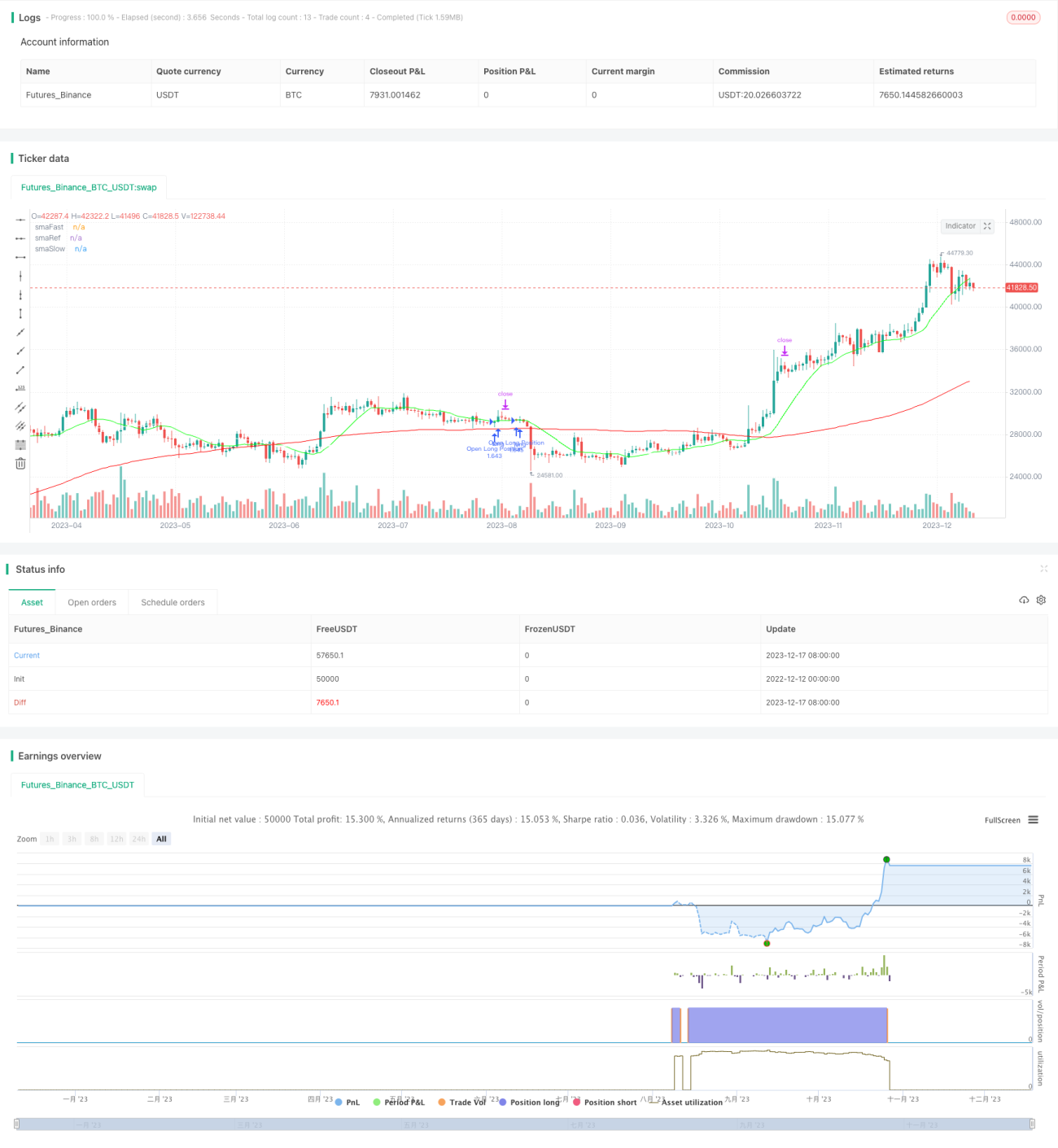
Estratégia de Negociação com Deslocamento de SMA
Visão Geral da Estratégia
Esta estratégia utiliza médias móveis simples (SMA) e alguns cálculos matemáticos para determinar pontos de compra/venda. Usamos a SMA de 100 dias como linha de base. Se o preço de fechamento estiver abaixo dessa linha, selecionamos um ponto de abertura com base no grau em que está abaixo, sendo esse valor (deslocamento inferior) uma porcentagem configurável. Para o fechamento, se o preço de fechamento estiver acima da nossa SMA de 100 dias, determinamos quando vender o deslocamento anterior. Se tentarmos vender muito cedo (enquanto o preço ainda está subindo), um trailing stop é ativado.
Princípio da Estratégia
A estratégia utiliza três linhas SMA: rápida (padrão 14 dias), lenta (padrão 100 dias) e de referência (padrão 30 dias).
Quando o preço de fechamento está abaixo da linha de referência e o deslocamento inferior em relação à SMA lenta é maior que o deslocamento inferior configurado, e a SMA rápida está subindo enquanto a SMA lenta está caindo, entra-se em posição comprada. Quando essas condições são atendidas, há uma alta probabilidade de cruzamento entre as SMAs rápida e lenta, constituindo um bom ponto de entrada.
Quando o preço de fechamento está acima da linha de referência e o deslocamento superior em relação à SMA lenta é maior que o deslocamento superior configurado, e o preço de fechamento subiu por 3 candles consecutivos, o lucro já foi realizado, e a SMA rápida está acima da SMA lenta, fecha-se a posição comprada. Se o preço continuar subindo significativamente, o trailing stop é ativado.
O tamanho de cada negociação é definido como uma porcentagem do patrimônio líquido, controlando assim a posição.
Análise das Vantagens da Estratégia
- Utiliza a vantagem da SMA, que suaviza a curva de preços e filtra o ruído do mercado.
- O cruzamento da SMA tem certa capacidade de prever tendências.
- Define deslocamentos em relação à SMA para evitar falsos rompimentos.
- Combina indicadores de tendência e cruzamento, aumentando a precisão das decisões.
- Utiliza trailing stop para travar lucros e evitar drawdowns.
Análise de Risco da Estratégia
- A própria SMA tem forte defasagem, podendo perder pontos de reversão de preço.
- A configuração inadequada dos deslocamentos pode tornar a estratégia muito agressiva ou muito conservadora.
- Parâmetros inadequados do trailing stop podem causar stops prematuros ou com amplitude excessiva.
- Não consegue lidar com mercados de alta volatilidade.
Medidas de otimização correspondentes:
- Combinar com outros indicadores antecedentes para filtrar entradas.
- Testar e otimizar repetidamente os deslocamentos.
- Realizar backtests repetidos nos parâmetros de stop para encontrar os ideais.
- Reduzir o tamanho da posição em períodos de alta volatilidade.
Direções de Otimização da Estratégia
- Testar SMAs de diferentes períodos para encontrar parâmetros ótimos.
- Adicionar outros indicadores para avaliar estrutura e tendência do mercado.
- Otimizar parâmetros do trailing stop para travar mais lucros.
- Ajustar o tamanho da posição de acordo com a volatilidade do mercado.
- Aplicar simultaneamente a múltiplos ativos e fazer combinações.
Resumo
A estratégia de negociação com deslocamento de SMA encontra o melhor momento de entrada definindo deslocamentos em relação a diferentes médias móveis SMA. Além disso, o mecanismo de saída utiliza trailing stop para travar lucros. A estratégia é simples de entender e fácil de implementar. Otimizando os parâmetros da SMA, configurações de deslocamento e níveis de stop, é possível obter melhores resultados. Esta estratégia é adequada para investidores que buscam lucros estáveis em prazos médio a longo prazo.
/*backtest
start: 2022-12-12 00:00:00
end: 2023-12-18 00:00:00
period: 1d
basePeriod: 1h
exchanges: [{"eid":"Futures_Binance","currency":"BTC_USDT"}]
*/

// @version=4
// Author: Sonny Parlin (highschool dropout)
strategy(shorttitle="SMA+Strategy", title="SMA Offset Strategy",
overlay=true, currency=currency.USD,- 1