Стратегия обратного тестирования радужного осциллятора

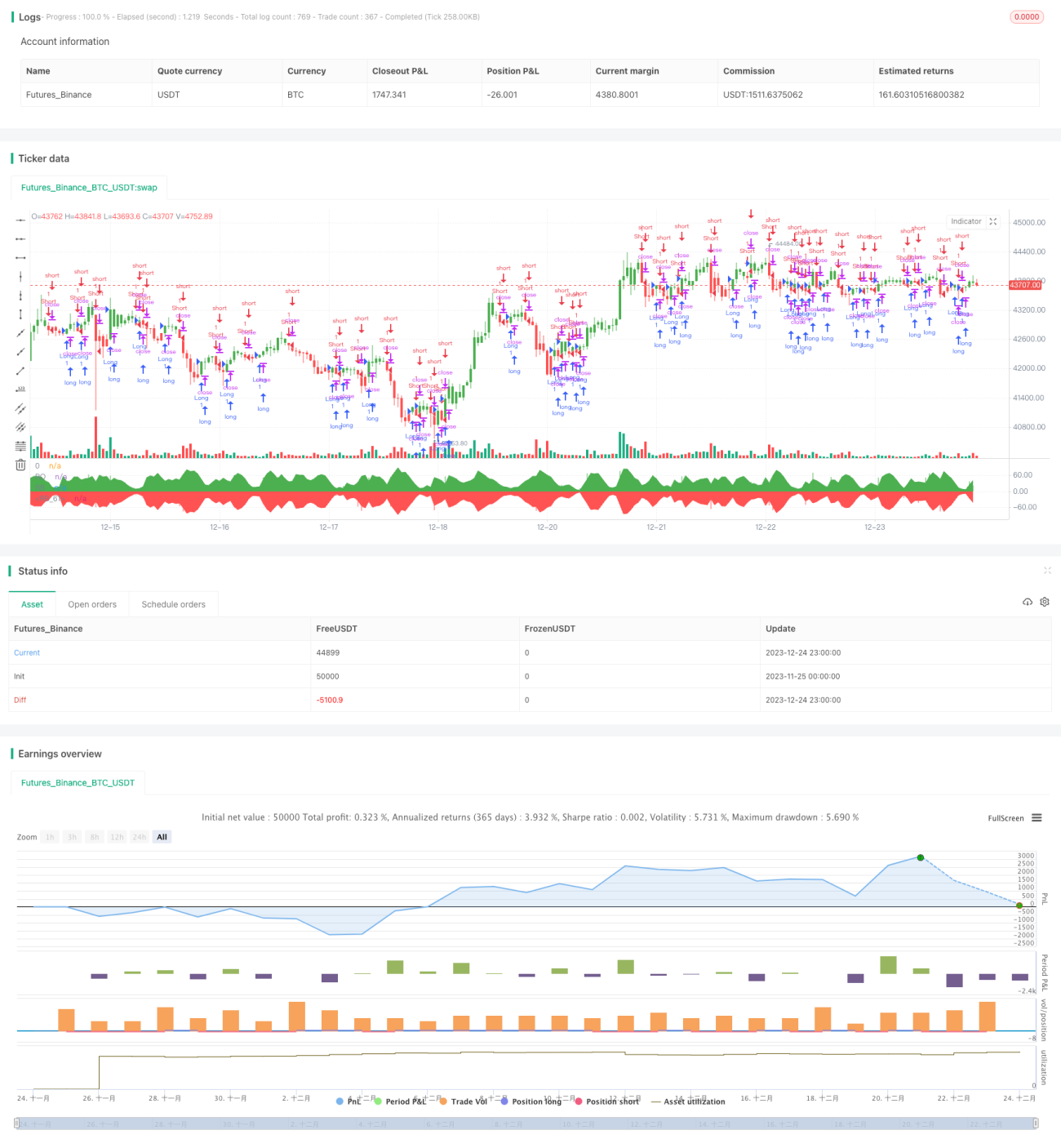
Обзор
Стратегия бэктестирования на основе радужного осциллятора представляет собой количественную торговую стратегию, использующую индикатор радужного осциллятора. Эта стратегия оценивает степень отклонения цены от скользящей средней, чтобы определить направление и силу рыночного тренда, и на основе этого принимает решения о длинных или коротких позициях.
Принцип стратегии
Ключевым индикатором стратегии является радужный осциллятор (Rainbow Oscillator, RO), формула которого выглядит следующим образом:
RO = 100 * ((Цена закрытия - 10-дневная скользящая средняя) / (Максимум максимумов - Минимум минимумов))
Здесь 10-дневная скользящая средняя – это простая скользящая средняя цен закрытия за 10 периодов. Этот индикатор отражает отклонение цены относительно её собственной скользящей средней. Когда RO > 0, цена находится выше скользящей средней, что является бычьим сигналом; когда RO < 0, цена находится ниже скользящей средней, что является медвежьим сигналом.
Стратегия также рассчитывает вспомогательный индикатор – полосу пропускания (Bandwidth, RB), формула которого:
RB = 100 * ((Максимум скользящих средних - Минимум скользящих средних) / (Максимум максимумов - Минимум минимумов))
RB отражает ширину между скользящими средними. Чем больше RB, тем сильнее колебания цены, и наоборот – цена стабильна. Индикатор RB можно использовать для оценки стабильности рынка.
На основе значений RO и RB стратегия определяет степень отклонения цены и стабильность рынка, генерируя сигналы на открытие длинных и коротких позиций.
Преимущества стратегии
Стратегия обладает следующими преимуществами:
- Основана на двух индикаторах, что позволяет избежать ограничений использования одного индикатора.
- Позволяет одновременно оценивать ценовой тренд и стабильность рынка.
- Проста в расчёте, легко понимается и реализуется.
- Визуализированный индикатор создаёт эффект «радуги», интуитивно понятен.
Риски стратегии
Стратегия также сопряжена с некоторыми рисками:
- Неправильная настройка параметров RO и RB может привести к ошибочным торговым сигналам.
- Стратегия с двумя скользящими средними склонна к ложным сигналам и частым сделкам.
- Неправильный выбор периода бэктестирования и инструмента может повлиять на эффективность стратегии.
- Учёт торговых издержек отсутствует, поэтому результаты в реальной торговле могут быть хуже.
Меры противодействия:
- Оптимизировать параметры RO и RB.
- Добавить фильтры для избежания частых сделок.
- Выбрать подходящие периоды бэктестирования и инструменты.
- Рассчитать и учесть торговые издержки.
Оптимизация стратегии
Стратегию можно дополнительно оптимизировать по следующим направлениям:
- Добавить функцию сглаживания (Smooth) для RO, чтобы избежать резких колебаний индикатора.
- Внедрить стоп-лосс для контроля убытков по каждой сделке.
- Комбинировать с другими индикаторами для повышения вероятности прибыли.
- Добавить модели машинного обучения для прогнозирования и оценки эффективности индикаторов.
- Оптимизировать параметры для различных инструментов, чтобы повысить адаптивность.
Заключение
Стратегия бэктестирования радужного осциллятора торгует длинными и короткими позициями, оценивая степень отклонения цены от скользящей средней и определяя рыночный тренд и стабильность. Стратегия интуитивно понятна, проста в реализации и обладает определённой практической ценностью. Однако она также сопряжена с рисками, поэтому требуется оптимизация параметров и правил торговли для снижения рисков и повышения эффективности в реальной торговле.
/*backtest
start: 2023-11-25 00:00:00
end: 2023-12-25 00:00:00
period: 1h
basePeriod: 15m
exchanges: [{"eid":"Futures_Binance","currency":"BTC_USDT"}]
*/

//@version=2
////////////////////////////////////////////////////////////
//  Copyright by HPotter v1.0 18/03/2018
// Ever since the people concluded that stock market price movements are not - 1