Estrategia cuantitativa de oscilación dominada por flujo

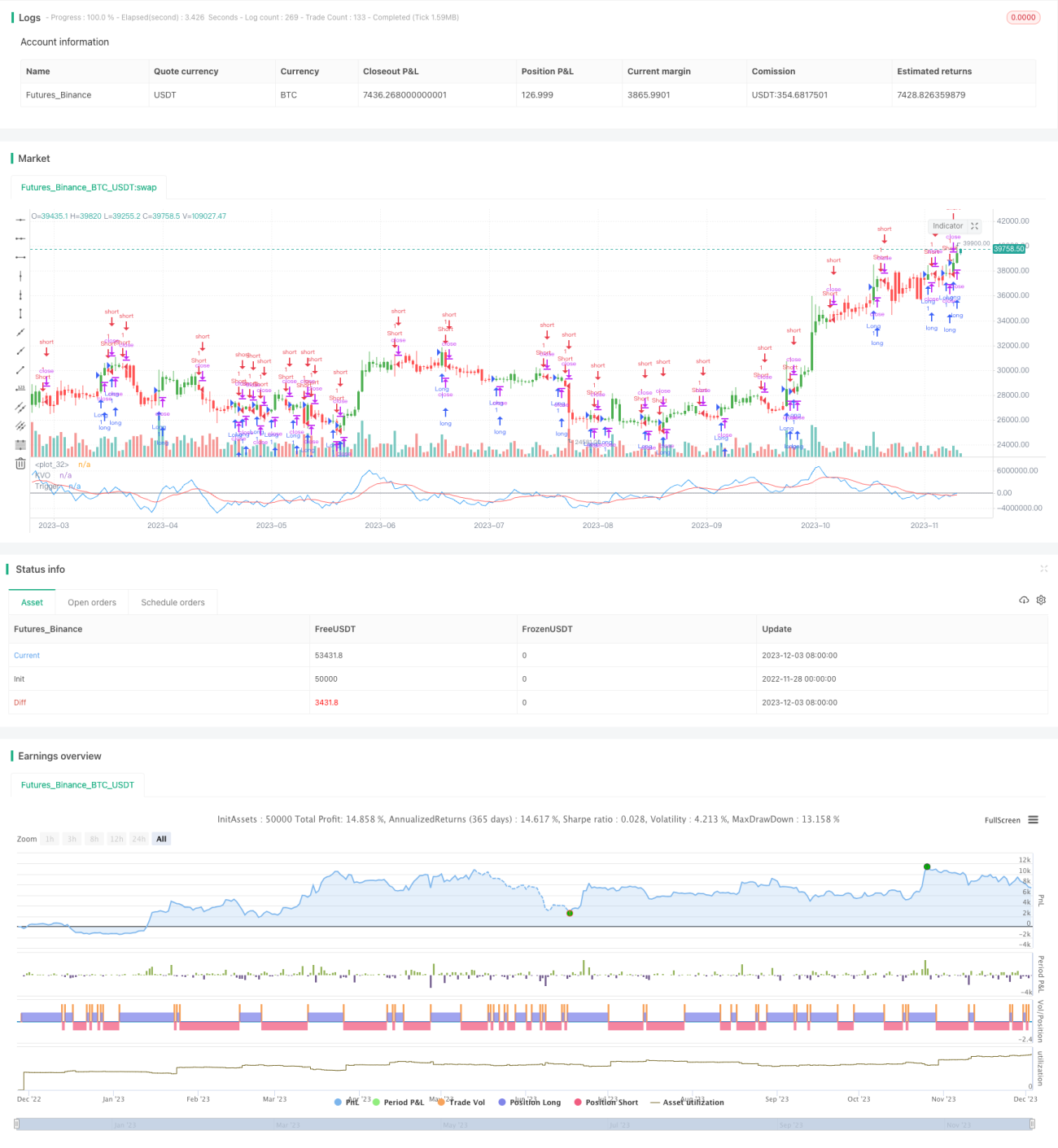
Esta es una estrategia de trading basada en el indicador cuantitativo Klinger. Captura los cambios en las fuerzas de compra y venta durante las fluctuaciones de precios para identificar puntos de inflexión en las tendencias del mercado. Sus ventajas son la sensibilidad y precisión, siendo adecuada tanto para análisis de corto como de largo plazo. Sin embargo, también existen algunos riesgos a tener en cuenta.
Principios de la estrategia
La estrategia se fundamenta en las siguientes teorías:
- El rango de precios (máximo - mínimo) refleja la amplitud de las oscilaciones del precio, mientras que el volumen es la fuerza motriz de dichas oscilaciones.
- Si la suma del máximo, mínimo y cierre de hoy es mayor que la de ayer, indica un fortalecimiento de la fuerza compradora y características de acumulación; en caso contrario, son características de distribución.
- Los cambios continuos en el volumen reflejan variaciones en las fuerzas de compradores y vendedores.
Con base en estas teorías, la estrategia calcula el indicador cuantitativo Klinger comparando la suma de los precios de cierre de hoy con la del día anterior, combinada con cambios en el volumen. Cuando el indicador cruza por encima de su propia media móvil, se va largo; cuando cruza por debajo, se va corto.
Específicamente, la estrategia incorpora tres indicadores internos:
- xTrend: refleja la fuerza de la tendencia de precios, basado en la comparación de la suma del precio de cierre de hoy con la de ayer.
- xFast: media móvil rápida de xTrend, con parámetro de 34 días.
- xSlow: media móvil lenta de xTrend, con parámetro de 55 días.
Luego se calcula la diferencia xKVO como indicador de trading. Se va largo cuando cruza por encima de su media móvil de 13 días (xTrigger), y se va corto cuando cruza por debajo.
Ventajas de la estrategia
La mayor ventaja de esta estrategia es que es adecuada tanto para análisis de corto como de largo plazo simultáneamente. La configuración de las medias móviles rápida y lenta permite capturar con sensibilidad los cambios en las tendencias de corto plazo. Al mismo tiempo, filtra el ruido del mercado a corto plazo y captura las tendencias a largo plazo, algo que muchos indicadores basados únicamente en el precio difícilmente logran.
Además, la estrategia se calcula únicamente con base en el precio y el volumen. No requiere cálculos matemáticos complejos, tiene alta eficiencia computacional y es adecuada para su aplicación en tiempo real.
Riesgos y contramedidas
El principal riesgo de esta estrategia es su capacidad limitada para distinguir falsas rupturas en el volumen. Cuando el precio presenta un ajuste a corto plazo y supera al alza la media móvil, la estrategia podría generar señales de compra erróneas. En estos casos es necesario combinar otros factores para juzgar la tendencia.
Además, la estrategia es sensible a la configuración de parámetros. Los parámetros de las medias móviles rápida, lenta y de la línea de activación requieren pruebas y optimización repetidas para obtener el mejor rendimiento.
Optimización de la estrategia
Según el análisis de riesgos, podemos optimizar aún más esta estrategia desde los siguientes aspectos:
-
Agregar un mecanismo de stop-loss. Salir cuando el precio retrocede un cierto porcentaje reduce la interferencia del ruido en los ajustes a corto plazo.
-
Agregar un filtro de tendencia. Combinar indicadores como el MACD (media móvil exponencial) para juzgar la dirección general del mercado y evitar errores direccionales en mercados laterales.
-
Optimizar la configuración de parámetros. Mediante backtesting histórico encontrar la mejor combinación de parámetros para mejorar la estabilidad de la estrategia.
-
Optimizar la gestión de capital inicial. Por ejemplo, ajustar dinámicamente el tamaño de la posición según las condiciones de take-profit y stop-loss.
Resumen
Esta estrategia captura los cambios en las fuerzas de compra y venta del mercado mediante la comparación entre la suma de precios y el volumen, equilibrando sensibilidad y estabilidad. Bajo la premisa de optimizar la configuración de parámetros y combinar con el juicio de tendencia, puede ofrecer un buen rendimiento. No obstante, los traders deben estar atentos a los riesgos inherentes a las limitaciones del indicador en sí mismo.
Conclusión
En general, la estrategia captura los cambios en las fuerzas del mercado comparando las cantidades de precios y los volúmenes tanto para la sensibilidad como para la estabilidad. Puede funcionar bien con parámetros optimizados y validación de tendencias, pero las limitaciones inherentes de los indicadores de volumen aún pueden suponer riesgos para los traders.
/*backtest
start: 2022-11-28 00:00:00
end: 2023-12-04 00:00:00
period: 1d
basePeriod: 1h
exchanges: [{"eid":"Futures_Binance","currency":"BTC_USDT"}]
*/

//@version=2
////////////////////////////////////////////////////////////
//  Copyright by HPotter v1.0 30/08/2017
// The Klinger Oscillator (KO) was developed by Stephen J. Klinger. Learning - 1