
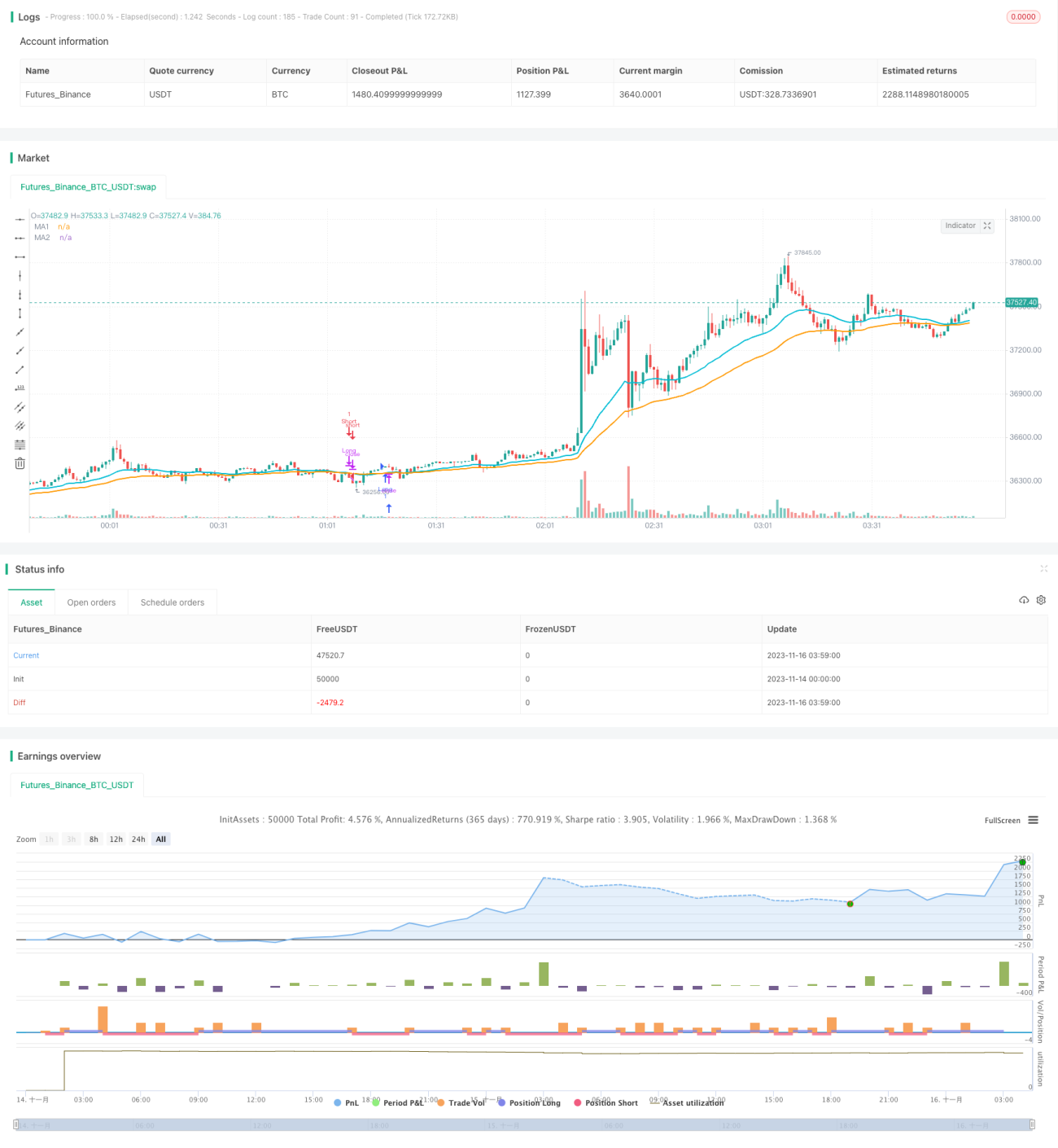
개요
이동평균선 교차 전략은 이동평균선을 기반으로 한 간단하면서도 효과적인 퀀트 트레이딩 전략입니다. 이 전략은 빠른 이동평균선과 느린 이동평균선의 교차를 매수 및 매도 신호로 활용합니다. 빠른 선이 아래에서 위로 느린 선을 돌파하면 매수 신호가 발생하고, 빠른 선이 위에서 아래로 느린 선을 하향 돌파하면 매도 신호가 발생합니다.
전략 원리
이 전략의 핵심 로직은 이동평균선을 이용해 시장의 추세를 판단하는 데 있습니다. 이동평균선 자체는 시장의 무작위적 노이즈를 필터링하는 기능을 가지고 있습니다. 빠른 이동평균선은 가격 변화에 신속하게 반응하여 최신 추세를 반영하는 반면, 느린 이동평균선은 최신 가격 변화에 늦게 반응하여 중장기 추세를 나타냅니다. 빠른 선이 느린 선을 돌파한다는 것은 단기 추세가 중장기 추세와 일치하도록 반전되었음을 의미하므로 거래 신호가 발생합니다.
구체적으로, 이 전략은 먼저 빠른 이동평균선 sig1과 느린 이동평균선 sig2를 정의합니다. 그런 다음 sig1과 sig2의 교차 관계를 기준으로 매수 및 매도 시점을 판단합니다. sig1이 아래에서 sig2를 돌파하면 매수 신호(longCondition)가 발생하고, sig1이 위에서 아래로 sig2를 하향 돌파하면 매도 신호(shortCondition)가 발생합니다. 전략은 매수 및 매도 조건이 충족될 때 주문을 실행하고, 손절 및 이익 실현 종료 주문을 설정합니다.
장점 분석
이 전략은 다음과 같은 뚜렷한 장점이 있습니다.
- 로직이 간단하여 이해하고 구현하기 쉽습니다.
- 매개변수 조정이 유연하여 다양한 시장 상황에 맞게 최적화할 수 있습니다.
- 다른 지표와 결합하여 신호를 필터링함으로써 안정성을 높일 수 있습니다.
- 성과가 우수하여, 예를 들어 EURCHF 일봉 데이터에서 EMA15-EMA30 조합의 승률은 83%에 달할 수 있습니다.
위험 분석
이 전략에는 다음과 같은 위험도 존재합니다.
- 가짜 신호(whipsaw) 효과가 심각하므로 손절 설정이 중요합니다.
- 박스권 장세에서는 효과가 좋지 않습니다.
- 다양한 종목과 주기에 적응하려면 반복적인 테스트와 매개변수 조정이 필요합니다.
최적화 방안:
- 다른 지표를 추가하여 가짜 신호를 방지합니다.
- 이동평균선 유형과 매개변수를 조정하여 다양한 종목에 적응합니다.
- 손절 및 이익 실현 비율을 최적화하여 위험을 통제합니다.
요약
이동평균선 교차 전략은 전반적으로 로직이 간단하고 실용성이 높은 퀀트 전략입니다. 매개변수 최적화와 적절한 개선을 통해 다양한 시장 환경에서 안정적으로 수익을 낼 수 있습니다. 퀀트 트레이더가 집중적으로 연구하고 적용할 가치가 있습니다.
/*backtest
start: 2023-11-14 00:00:00
end: 2023-11-16 04:00:00
period: 1m
basePeriod: 1m
exchanges: [{"eid":"Futures_Binance","currency":"BTC_USDT"}]
*/

//@version=3
// Simple yet effective MA cross strategy.
// You'll have to tune the parameters to get an optimal win ratio.
// If JPY or XAU or any other currency with pips defined as the - 1